Record Number of Diamondback Terrapin Nesting and Hatchlings at Head of Duck Creek, Wellfleet Conservation Trust Preserve

In implementing the Wellfleet Conservation Trust’s objectives for land conservation, the Trust prioritizes the preservation of habitats critical to threatened and endangered plants and wildlife.  The Trust’s properties in their turn are a source of information about the health of these species. The Trust collaborates with researchers and organizations to survey the properties to help understand how the health of the species are evolving.
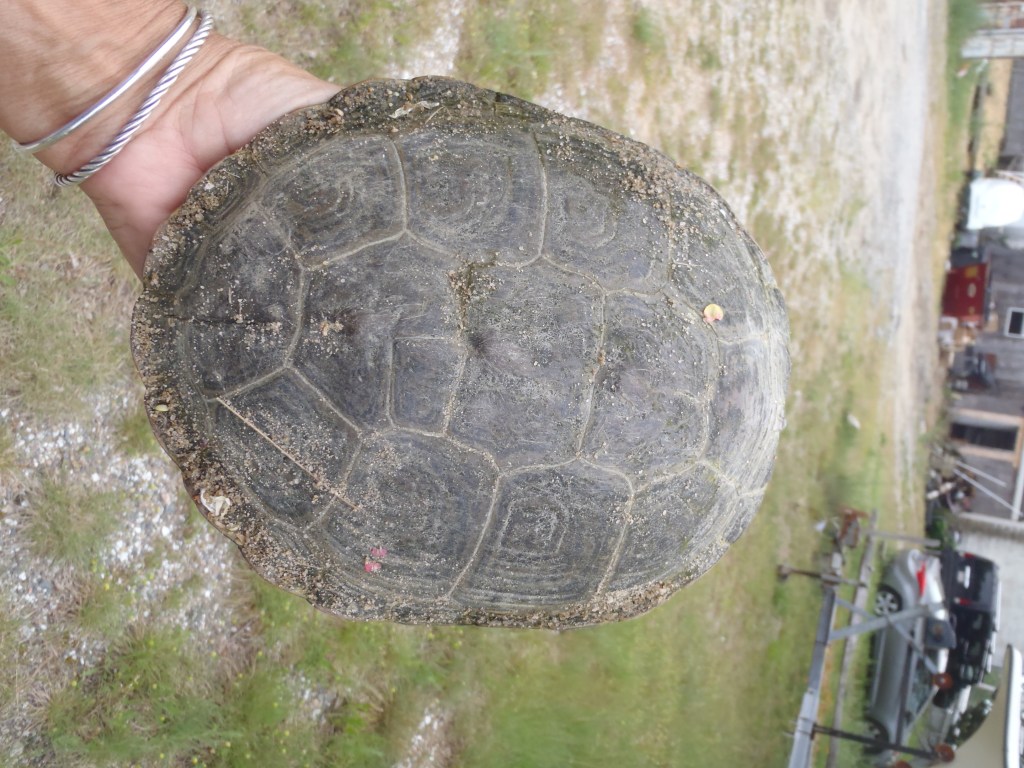
OLYMPUS DIGITAL CAMERA

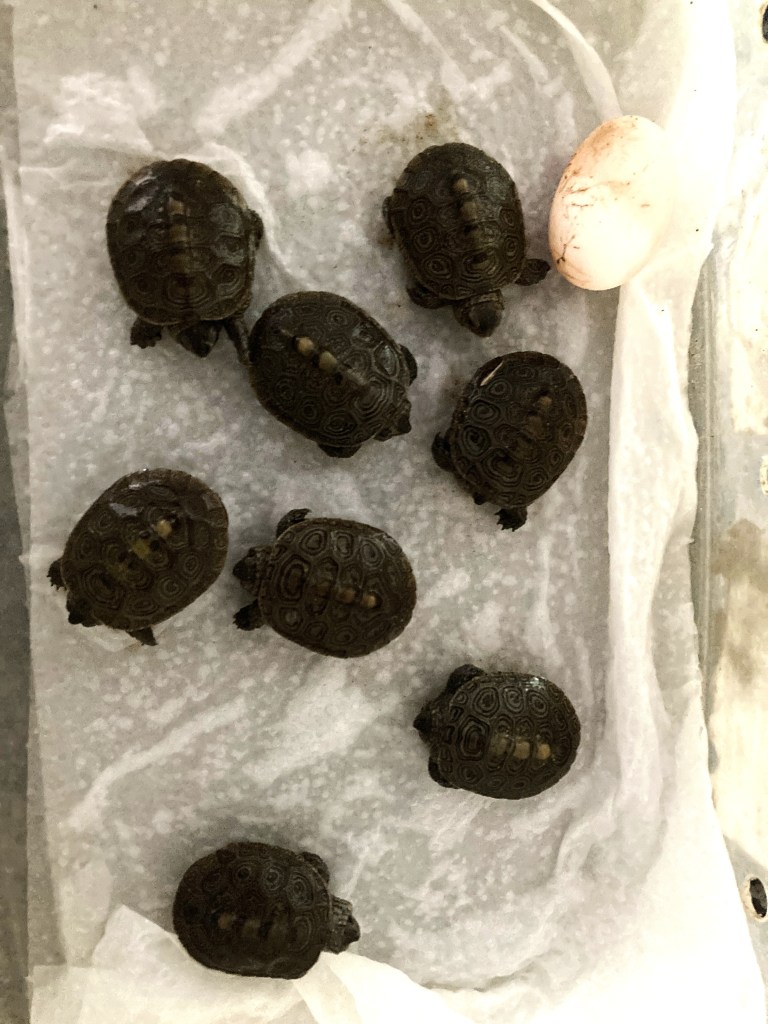
One of these notable collaborations is with Dr. Barbara Brennessel who surveys the diamondback terrapins on the Trust’s preserve at the Head of Duck Creek.  The good news is 2026 was a very productive year for diamondback terrapins and hatchlings.
2026 Head of Duck Creek Terrapin Report

Submitted by Dr. Barbara Brennessel

For 2026, Head of Duck Creek was the only location I regularly monitored.  During nesting season, I was able to patrol after high tide each day.  I was quite surprised: unlike last year, the coyotes did not devastate the site and I documented a record number of nests and hatchlings.

 I encountered 30 terrapins and was able to PIT tag or scan 22 of them. Five terrapins were recaptures. The first nest was discovered on June 9 and the last was July 7.  On busy days, terrapins could be seen wandering past the Head of Duck Creek Conservation area and into the Mobil gas station. The mechanics were very helpful in returning them to the nesting area.  With permission from the Wellfleet Conservation Commission and the Wellfleet Conservation Trust, Michael Fisher and I installed a low garden fence on June 24 which helped to contain the female terrapins in the nesting area and away from vehicles.  The fence was removed by Michael Fisher in September. 

Protected Nests27
(Protected Nests Breached)(3)
Wild nests7
Depredated nests53
Total Nests87
  
Hatchlings from wild nests40
Hatchlings from protected nests212
Total Hatchlings252
  
Encounters30
Recaptures5

Thirteen of the hatchlings from Head of Duck Creek will spend the winter in various outer Cape schools as part of a Headstart program.  Next June, I plan to release them in Duck Creek at Cannon Hill, where they will be more removed from the gas station and Route 6.

 Professor Emerita of  Wheaton College, Norton Mass., Dr. Brennessel has been involved with research and conservation of diamondback terrapins for over 25 years.  She is a member of the Diamondback Terrapin Working Group and author of “Diamonds in the Marsh: A Natural History of the Diamondback Terrapin.”  Her other natural history books include Good Tidings: The History and Ecology of Shellfish Farming in the Northeast and The Alewives’ Tale: Life History and Ecology of River Herring in the Northeast.  Barbara is a Wellfleet resident.
HAWK RESCUE IN DUCK CREEK

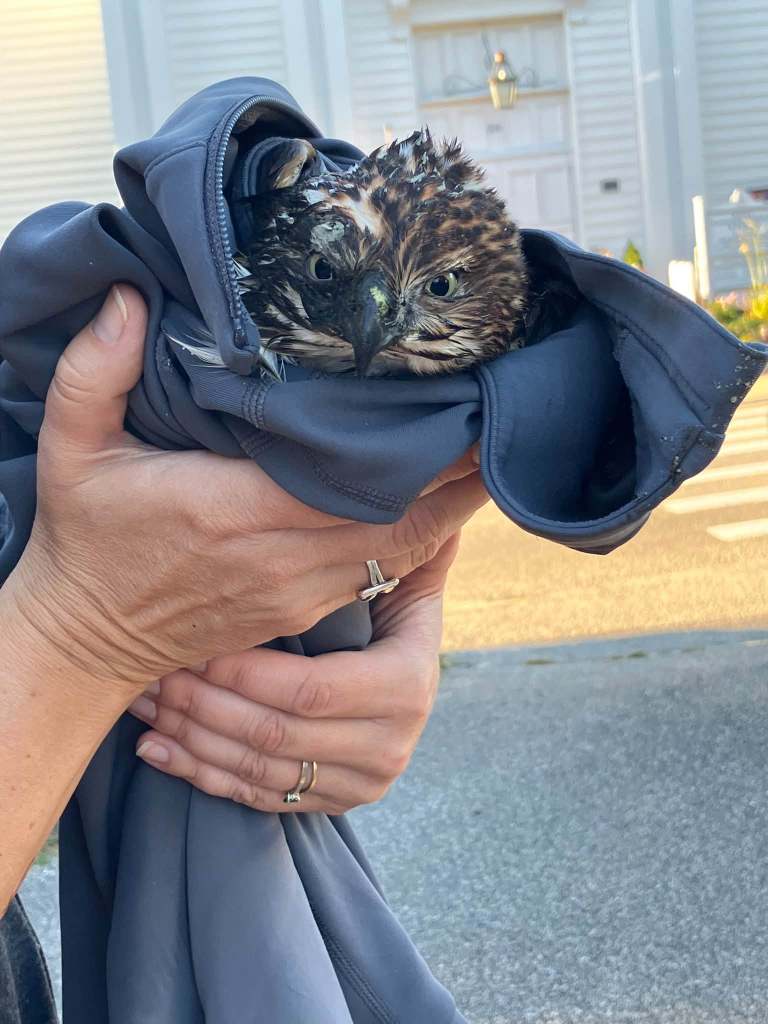
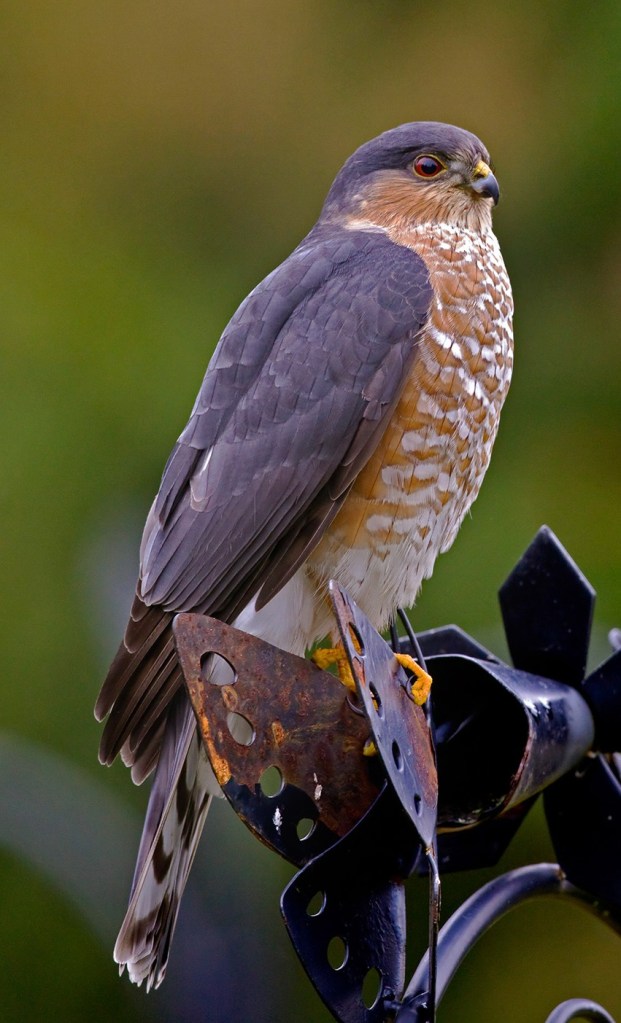
On Saturday, Sept. 5th, WCT Trustee Jen Elsenshon received a call from the Wellfleet police letting her know that some folks called to report an osprey or other raptor stuck in the mud by Uncle Tim’s Bridge.  She and her husband Jon got some equipment and walked down to Duck Creek to see if they could spot it. They met a man named Doug who showed them where the bird was.   Doug had tried to rescue him, too.  At this point, the tide was coming in and taking the bird towards the Head of Duck Creek.  

Jen walked as far as she could into the marsh to see if she could grab him while Jon went home to get their canoe. Jeff Kemprecos helped Jon get the canoe onto the car.  Jen couldn’t get close enough to the bird before the mud became treacherous, so she headed back to Commercial Street.  Doug kept an eye on Cooper (they called him that because he turned out to be a Cooper’s Hawk) while Jon and Jen got the canoe into the creek.

Jen contacted Wild Care, the police, and the Conservation Agent to let them know that they would be accessing the creek through a WCT property, the marsh to the right of the bridge. The tide took them to Cooper quickly, and Jen was able to grab him from the marsh grass that he was hung up on. He must have been exhausted because he didn’t resist Jen’s picking him up at all.

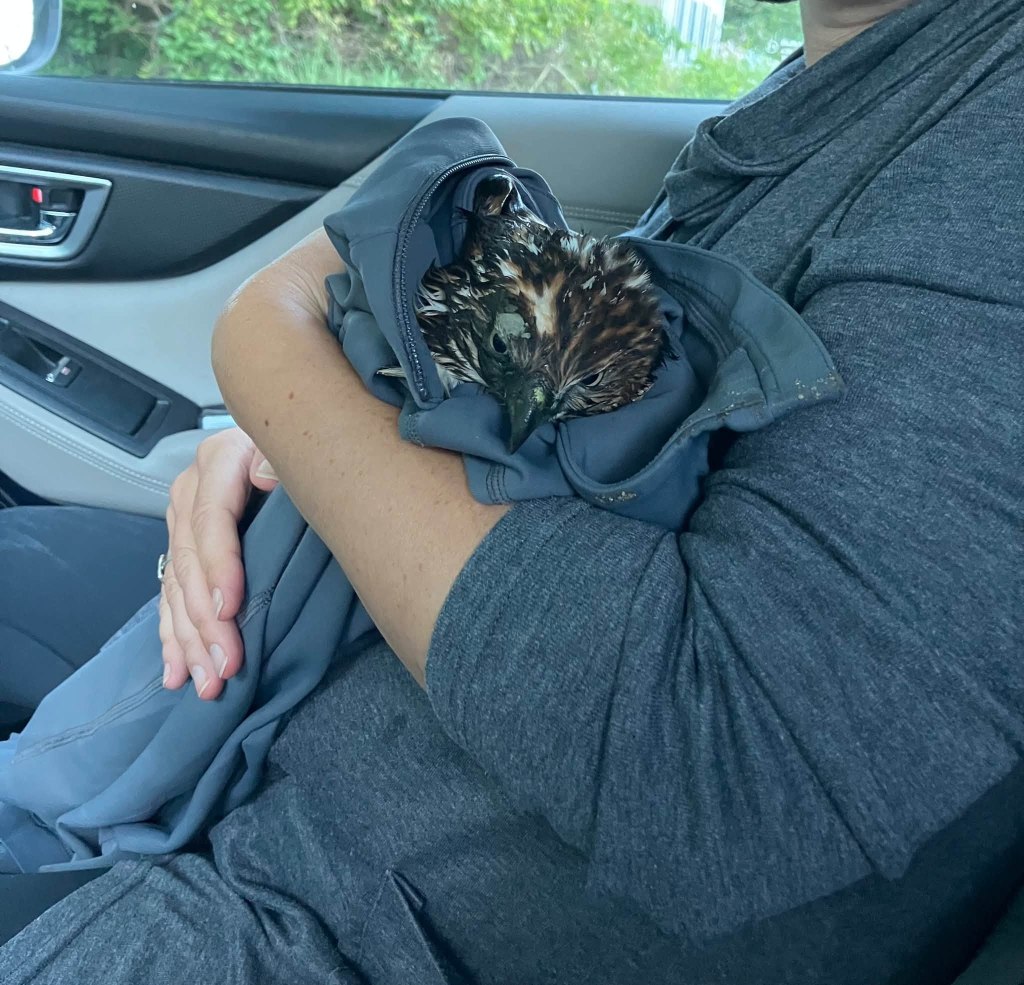
The Elsenshons paddled to the trail by Cannon Hill, and Doug helped pull them to shore. Jen disembarked with Cooper, and Doug gave her a shirt to wrap him in.  Jen walked back to Commercial Street to meet Jon when he tied the canoe up at Party Duck’s house. They allowed Jon to keep the canoe there overnight.

Another volunteer from Wild Care, Jan, met Jon and Jen at their house on Main St.  and took Cooper to Wild Care.  She happened to be in the area to pick beach plums but ditched her endeavor to get Cooper.  It had a small injury under his wing but seemed okay otherwise besides being tired and cold. He was doing ok as of Sunday.  Jen will get an update this week on how he is recuperating.

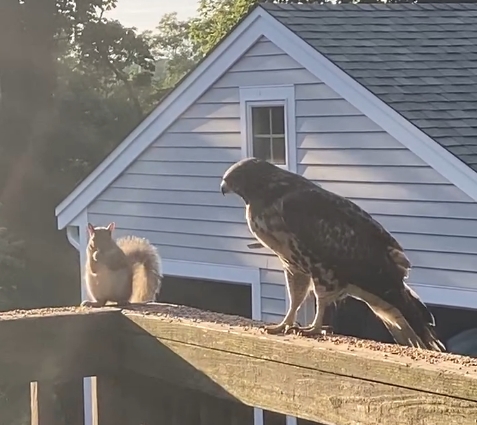
This isn’t the first time the Elsenshons have encountered an unusual situation involving a juvenile hawk.  I spring, they observed a young,  red-tailed hawk visiting their house, contemplating how it might approach a squirrel sharing railing space on their deck.  (See photo)

Jen and Jon are quickly becoming our resident hawk whisperers.   

INTERVIEW WITH OUR NEWEST TRUSTEE: BARRY JOHNSTON ANSWERS 10 QUESTIONS

How did you decide to move from Virginia to Wellfleet?

We have owned a summer house in Wellfleet since 2007 and lived on a farm in the Blue Ridge Mountains of Virginia.  In 2023 we decided it was time to downsize and Wellfleet became our home. 

Tell us about your conservation efforts in the Blue Ridge Mountains.

When we renovated our old farm house we discovered it was built around a prerevolutionary log cabin which we restored.  We placed the farm in a conservation easement and over the years we removed invasive species, promoted wild flowers and native plants, created trails and conducted wildlife surveys with the Smithsonian Institute.  As a Virgina Master Naturalist, I volunteered to preserve Virginia’s natural habitat including as a National Park volunteer to protect rare native plants in the Shenandoah National Park.

What is your educational and professional background?

I am an economist/econometrician by training. I worked for 27 years with the International Monetary Fund (IMF) in Washington DC and before that in London at the Bank of England and Treasury, and in Basel Switzerland, specializing in finance. I now teach on the financial effects of climate change and bio diversity loss.

Who and/or what got you interested in the Wellfleet Conservation Trust?

My wife Pat and I are gradually finding our way in the Wellfleet community and we were looking for volunteer opportunities.  I thought the WCT would be a good fit and I am very appreciative to have been selected as a trustee.

What are your interests and experiences that you bring to the W.C.T.?

What I learnt in Virginia is that conservation is not just a question of protecting land.  Stewardship of the land and education is a vital part of conservation. I hope my background will allow me to contribute on that.

What are some early influences that inspired your interest in nature/conservation?

I grew up in Northern Ireland surrounded by open country side. My family were from farming stock. It was part of growing up to appreciate and spend time in nature.  

What Cape and Wellfleet activities and places do you especially enjoy and why?

Swimming in Great Pond and sailing my catboat for the peace and tranquility.

What Wellfleet or Cape organizations do you belong to?

We are members of Mass Audubon, the Friends of the Cape Cod National Seashore and Nauset Newcomers.

Tell us about your family members.

My wife Pat of 48 years is an avid gardener.  My eldest daughter lives in Brooklyn, my second daughter lives in Switzerland with our three grand-children and our son lives in Scotland. Spending time on our farm in Virginia instilled them with a love of nature. Our son is a marine biologist.

What is something surprising about you that not too many people know?

I am a fan of minimalist music.

Bonus question – What is something else you would like to say to our readers?

The WCT will only be able to conservation a relatively small amount of land.  To preserve our habitat, the conservation effort must be much bigger and depends on you.  Start by creating a home environment to attract the birds, butterflies and bees — plant natives and remove invasives.