
In implementing the Wellfleet Conservation Trust’s objectives for land conservation, the Trust prioritizes the preservation of habitats critical to threatened and endangered plants and wildlife. The Trust’s properties in their turn are a source of information about the health of these species. The Trust collaborates with researchers and organizations to survey the properties to help understand how the health of the species are evolving.
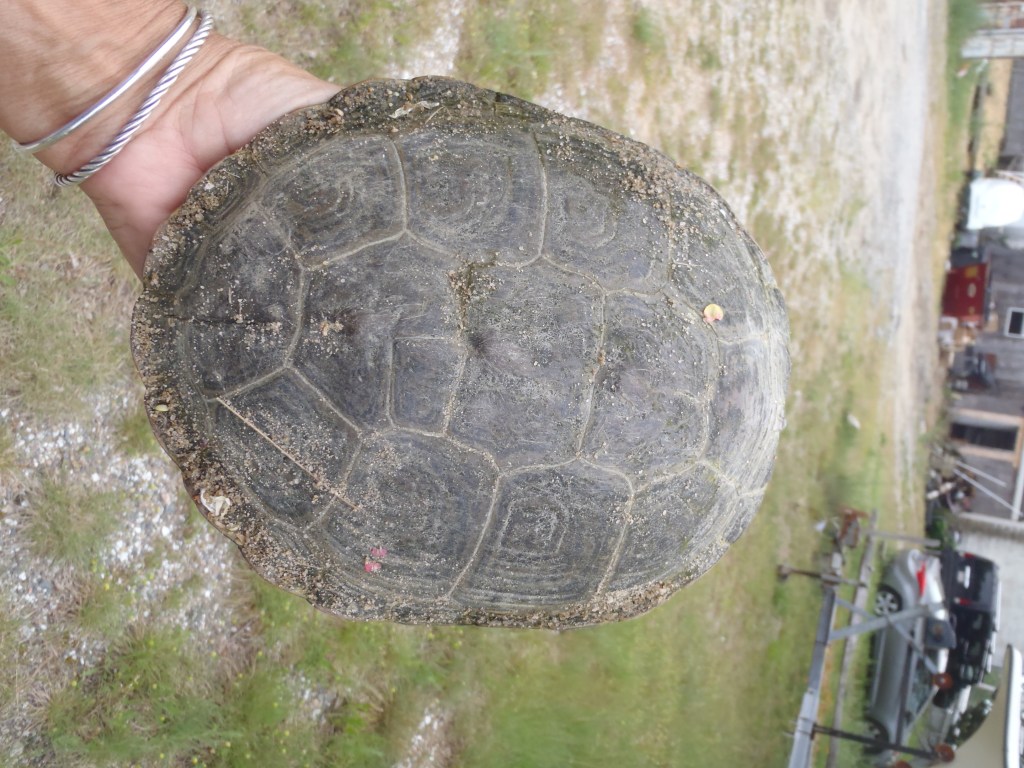
One of these notable collaborations is with Dr. Barbara Brennessel who surveys the diamondback terrapins on the Trust’s preserve at the Head of Duck Creek. The good news is 2026 was a very productive year for diamondback terrapins and hatchlings.
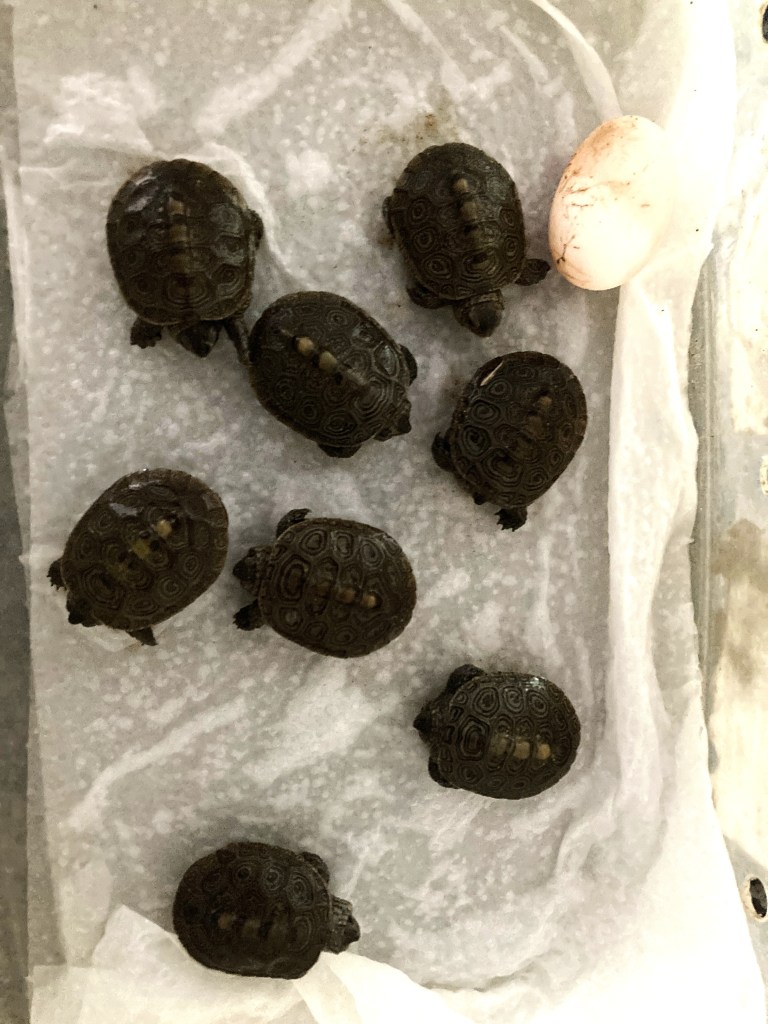
2026 Head of Duck Creek Terrapin Report
Submitted by Dr. Barbara Brennessel
For 2026, Head of Duck Creek was the only location I regularly monitored. During nesting season, I was able to patrol after high tide each day. I was quite surprised: unlike last year, the coyotes did not devastate the site and I documented a record number of nests and hatchlings.
I encountered 30 terrapins and was able to PIT tag or scan 22 of them. Five terrapins were recaptures. The first nest was discovered on June 9 and the last was July 7. On busy days, terrapins could be seen wandering past the Head of Duck Creek Conservation area and into the Mobil gas station. The mechanics were very helpful in returning them to the nesting area. With permission from the Wellfleet Conservation Commission and the Wellfleet Conservation Trust, Michael Fisher and I installed a low garden fence on June 24 which helped to contain the female terrapins in the nesting area and away from vehicles. The fence was removed by Michael Fisher in September.
| Protected Nests | 27 |
| (Protected Nests Breached) | (3) |
| Wild nests | 7 |
| Depredated nests | 53 |
| Total Nests | 87 |
| Hatchlings from wild nests | 40 |
| Hatchlings from protected nests | 212 |
| Total Hatchlings | 252 |
| Encounters | 30 |
| Recaptures | 5 |
Thirteen of the hatchlings from Head of Duck Creek will spend the winter in various outer Cape schools as part of a Headstart program. Next June, I plan to release them in Duck Creek at Cannon Hill, where they will be more removed from the gas station and Route 6.
Professor Emerita of Wheaton College, Norton Mass., Dr. Brennessel has been involved with research and conservation of diamondback terrapins for over 25 years. She is a member of the Diamondback Terrapin Working Group and author of “Diamonds in the Marsh: A Natural History of the Diamondback Terrapin.” Her other natural history books include Good Tidings: The History and Ecology of Shellfish Farming in the Northeast and The Alewives’ Tale: Life History and Ecology of River Herring in the Northeast. Barbara is a Wellfleet resident.


You must be logged in to post a comment.