Our 15th annual walk will be held on September 16, 20203. This is a week later than usual.
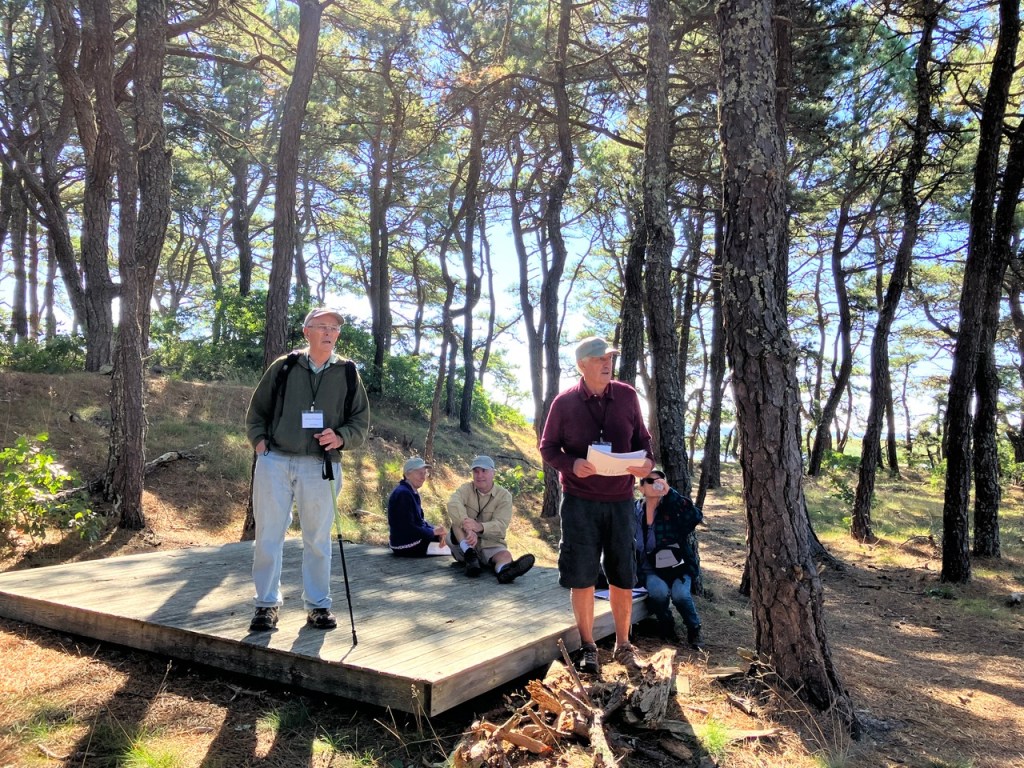
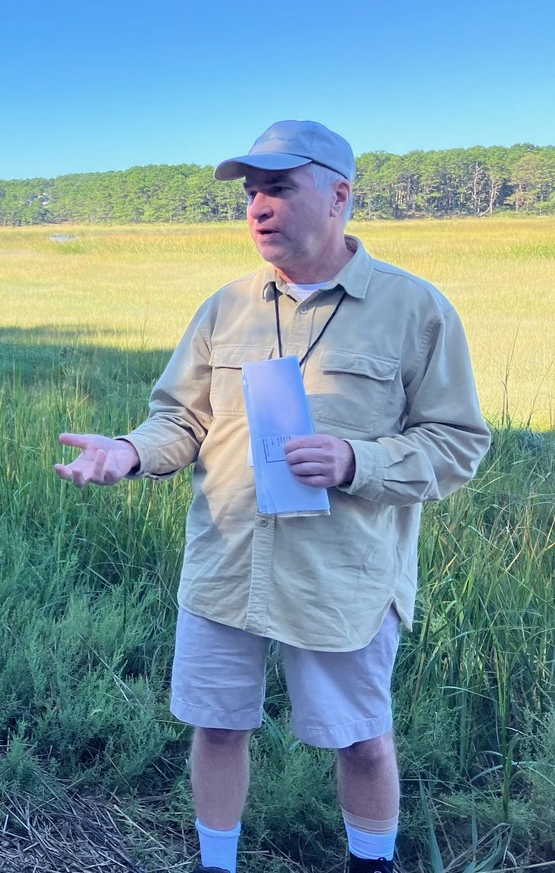
The walk will cover the Fox Island Marsh and Pilgrim Springs Woodland Conservation Area.
Much of the walk will be along the shore with views of the marsh, Fox Island, Blackfish Creek, Indian Neck, Field Point, and Old Wharf Point.
The walk, which is expected to take about two hours, starts at 9:00 am. Participants are asked to arrive by 8:45. There is limited parking, so we urge you to carpool. No pre-registration is required.
Directions to the start: Take Paine Hollow Rd off Route 6. After 0.3 miles, turn right onto Baker Road and follow it to the sand road. There will be people there to assist with parking.
Be sure to wear sturdy shoes, since the terrain is mostly dirt roads and pathways with some hills. It may be muddy in spots. Don’t forget sunscreen, insect repellent, hat, and water.
The rain date is September 17.
We’re looking forward to a lovely day and hope you’ll join us.
Seth Rolbein’s latest post, Buying open space, pushing big-lot zoning, provides a straightforward discussion of the need and possibilities for affordable housing on Cape Cod. The loss of affordable housing has transformed daily life, including hollowing out communities, increasing traffic, and endangering health.
Seth shows clearly how the loss of affordable housing was not due to protecting open space for conservation and recreation. Instead, decades of zoning battles that emphasized single-family homes and ever-larger lot sizes drove up costs “and ignored alternatives like more density in well-selected places.”
Many of us grew up playing the Animal, Vegetable, Mineral? game. You had to guess an object, knowing only which of those three categories it fell into. Animal and vegetable (plant) were supposed to cover all living things.
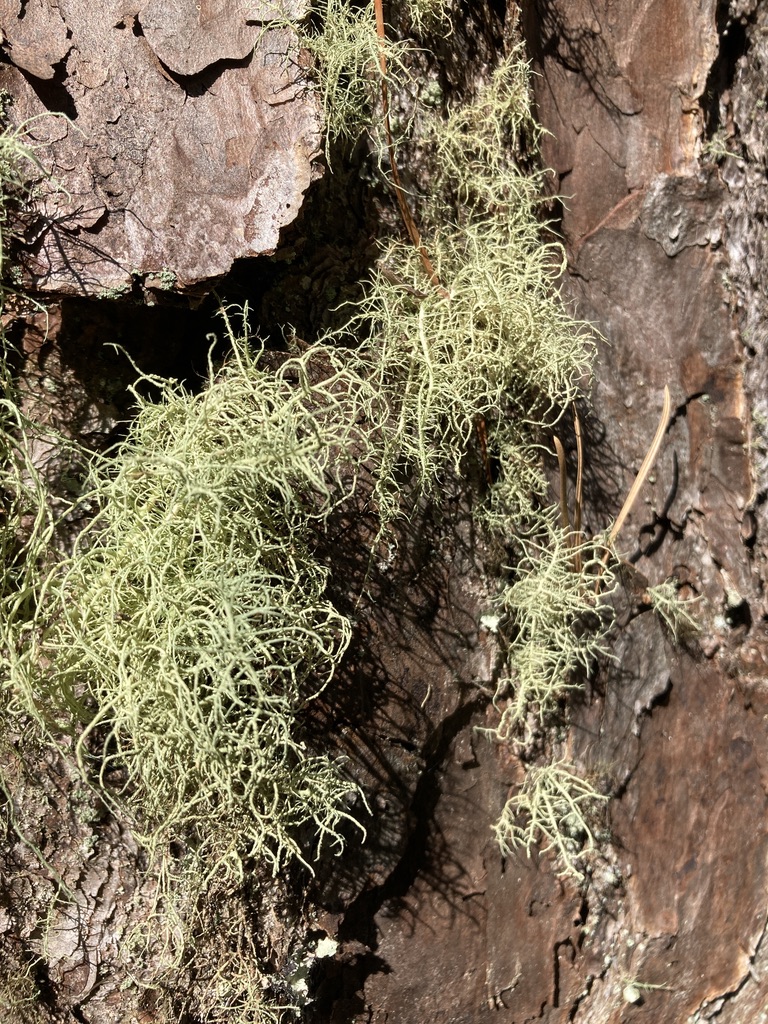
Beard lichen (Usnea), a genus of fruiticose lichen
But what if you came across some living thing that was neither animal nor vegetable? What if the thing you found looked like a plant, but wasn’t; looked like a single organism, but wasn’t; could appear as a mineral of some sort, but was full of life?
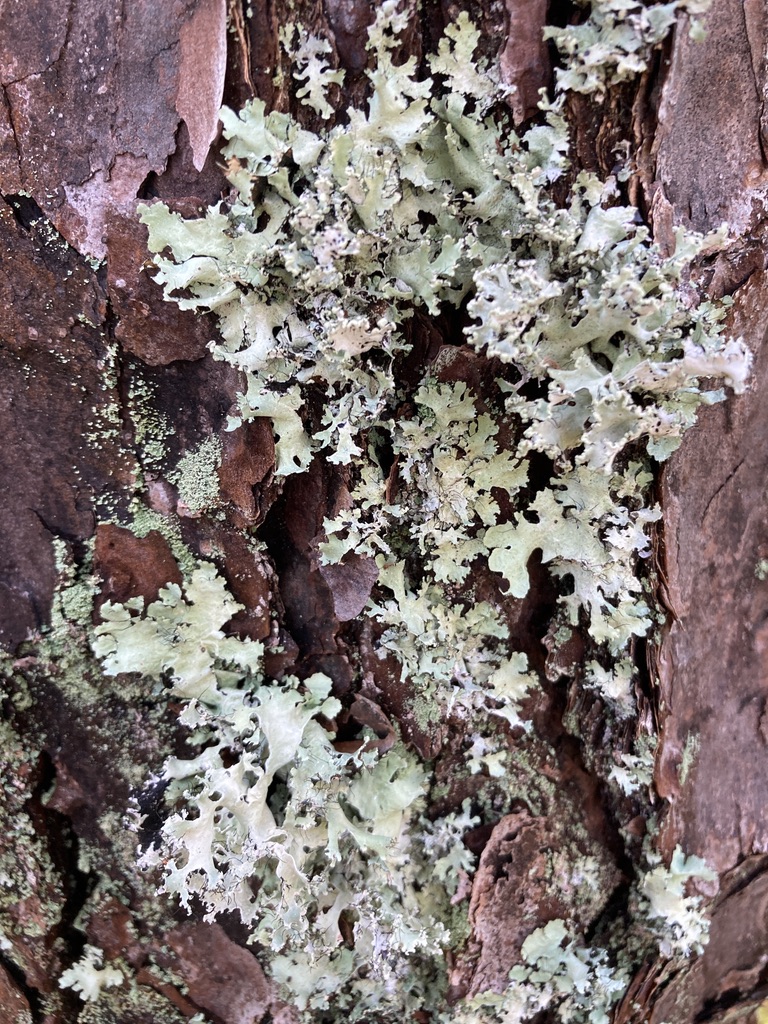
Powdered ruffle lichen (Parmotrema hypoleucinum); a foliose type
You could be looking at one of the most interesting phenomena on Cape Cod, but one that is often overlooked, even by those otherwise expert about birds, trees, wildflowers, turtles, mammals, mollusks, insects, and other fascinating flora and fauna.
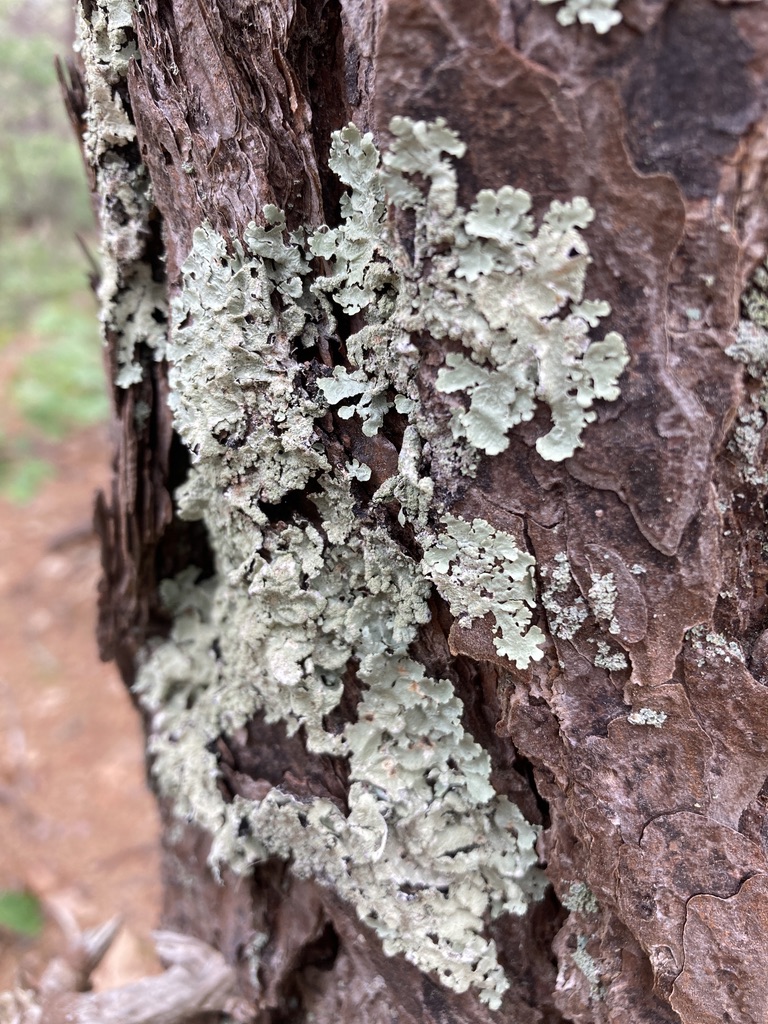
That strange thing you observe might be a lichen, a composite organism made up of algae or cyanobacteria living among multiple fungi species. The fungi are in a kingdom separate from either plants or animals. That kingdom includes yeasts, molds, and mushrooms. Like animals, they cannot photosynthesize, but acquire food directly or indirectly from plants.
Within a lichen, the fungi provide structure and attachment to a tree, rock, or split rail fence. The algae contain the green pigment, chlorophyll, which gives the green color to the lichen and captures energy from the sun to support. photosynthesis.
One common type you may find is foliose, or leaf-like lichen. Another is fruiticose, reminiscent of tiny fruit trees. There are also crustose, which attach to rocks so tightly that they can’t be removed without destroying them or the rock. They seem like the Mineral in the old guessing game. Some common crustose lichen are bright orange.
Reindeer lichen (Cladonia portentosa); fruiticose
Lichens are gray when the algae components are dead or dormant, but they may turn bright green after a rain. The fungus (which surrounds the algae) soaks up water, causing its to become more transparent, and revealing the green pigment of the algae.
See what you can find the next time you venture onto a WCT trail.
The month of June has become a time to welcome students from Wellfleet Elementary School to trails sponsored by the Wellfleet Open Space Committee and the Wellfleet Conservation Trust.
The two organizations have collaborated for many years on programs for schoolchildren. One of their most important functions is to help young people appreciate the value of nature and open space.
This year Peggy Sagan from the Open Space Committee led a program for grades 3, 4, and 5, involving activities in class related to nature, conservation, and map reading, plus field trips.
Fox Island Marsh and Pilgrim Springs Woodlands Conservation Area
The classes included Melanie Griswold’s grade 3, Kristin Connolly and Tessa Wood’s grade 4, and Brendan Pursel’s grade 5. For grade 4 there was a field trip to the Fox Island / Pilgrim Springs area and for grade 5 a trip to the Herring River Overlook. Others helping Ms. Sagan at various times included John Grieb from the Open Space Committee, and Bill Iacuessa, Denny O’Connell, and Chip Bruce from the WCT.
Grade 4 explores the Fox Island Marsh and Pilgrim Spring Woodlands
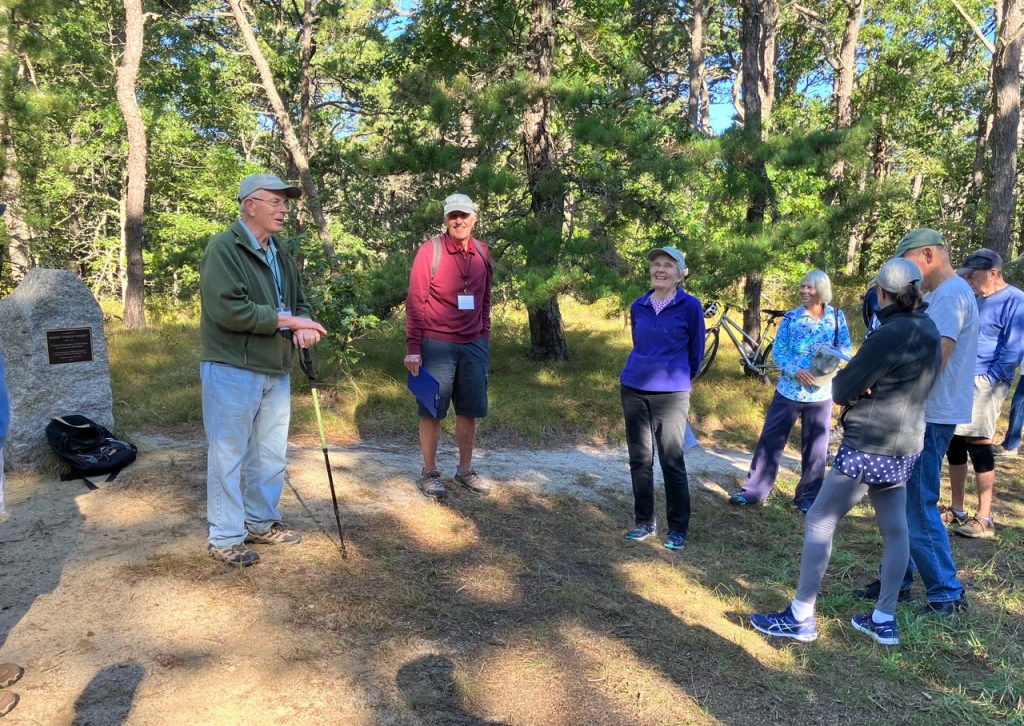
At the start of our hike, we asked two students to read the text on the Robert Hankey plaque. They were stars, prompting a discussion about what a trust is and why we need to conserve open space and habitats.
Memorial for Robert Gordon Hankey at Fox Island
At the end of the hike, students recalled their best experience. Two said that they liked the fiddler crabs the most. But one said she liked the dead ones, because you could hold them more easily and look closely. Another said she liked the live ones.
One student liked sea shells along the salt marsh; another liked seeing the berries. Yet another liked hearing about how we construct trails.
Green shield lichen on a pine tree
In notes after the field trip, students wrote things like this:
My favorite was seeing all the crabs and sea pickles. Thank you for the amazing field trip. I had the best time ever.
Thank you for teaching us a lot of nature facts that I didn’t know.
Thanks for letting us go on that really inspiring field trip!
Grade 5 explores the Herring River Overlook
Herring River Overlook trailhead
Grade 5 students at the Herring River Overlook trail were asked to observe. Within 10 seconds of starting out they had found a box turtle.
They observed many things after that in an all too short adventure. They learned about lichen and moss, bayberry and bearberry, and the glacial history of Cape Cod. They talked about the estuary with its brackish water.
Box turtle near the HRO parking lot
When we came to the last bench on a counter-clockwise circuit, the first one said, “Wow! What a view!”
Another student, already contemplating graduation, asked whether the middle school students would get to do this.
We talked about staying on the trails, both as a safety measure and to protect the fragile ecosystem.
Judging by the smiles, the many questions, and thank you notes, the students in all three grades had a great time and learned a lot.
A friend commented that he had done a lot of hiking and walking on nature trails, but that he’d only recently become aware of the many decisions and the work it took to build and maintain a trail. He would be interested to see what we do with Wellfleet Conservation Trust trails.
Protecting the site
We plan these trails to entail minimal destruction to the environment. They should be obvious so that walkers can stay on them without creating social trails through the woods. But we like them to be as unobtrusive as possible. This requires a balance of engineered and natural features.
Among other things, we cut overhanging branches that pose a hazard to walkers, but leave any vegetation higher than a Celtics player, unless it’s in danger of falling. We make the trail wide enough for anyone to walk easily, but usually require a single file. We place trail blaze arrows at confusing junctions, but try not to use more than absolutely necessary.
Visitors from Nepal helping to repair a roped off area at Herring River Overlook
In some places we’ve added stakes and ropes to discourage off trail walking. As enticing as that bushwhacking may be for some, it can be very destructive for the land. For example, at the Herring River Overlook trail, walking down the dune towards the river kills fragile lichen, moss, bearberry, mayapple, violets, sea oats, and other vegetation. That in turn can lead to serious dune erosion.
The ropes are easily bypassed, but we don’t want to mar the sites with massive barriers. We have to trust that responsible visitors will recognize the message and stay on the trail.
National Park Service plea, too often ignored
In many parks today we see the sign that “vegetation grows by the inch but dies by the foot.” That’s especially true on Cape Cod. Tenacious plants can survive despite salty winds off the sea, sandy, nutrient poor soil, and hungry wildlife, but only if we’re on their side.
Earth Day is an annual event to demonstrate support for environmental protection.
First held on April 22, 1970, it now includes a wide range of events including 1 billion people in more than 193 countries, coordinated globally by EarthDay.org . The official theme for this year is Invest In Our Planet.
Earth Day is a perfect match for land trusts. Many more land trusts focus on it each year.
With a similar mission from the beginning, Wellfleet Conservation Trust signs began appearing in Wellfleet neighborhoods starting in 2012.
Cost: $20 per person. Reserve. Driving directions included in your confirmation receipt.
Sponsored by Harwich Conservation Trust and Wellfleet Conservation Trust, join Mark McGrath for a hike around the seven ponds area in Wellfleet while recalling fascinating stories and conversations between Thoreau and locals as discussed in his book, Cape Cod, featuring this region.
This unique corner of the Outer Cape was where Bauhaus architects including Gropius, Breuer, and others enjoyed idyllic beach lifestyles in their ‘modern’ and inexpensive summer houses.
This hike will begin and end at Newcomb Hollow Beach and will cover 2.5 miles across unpaved roads and several well-travelled social trails in the woods.
The presentation begins with Wampanoag people 10,000 years ago and takes us to the present and beyond. It includes the rationale for conservation, lots of interesting historical background, and beautiful photographs of Cape Cod conservation areas.
The Town of Wellfleet is in the process of updating its Open Space and Recreation Five-Year Plan and needs your input.
WCT supports the Wellfleet Open Space Committee in getting wide distribution of the new survey. It takes about 10 minutes to complete. All responses are anonymous.
The open space survey will identify needs and concerns of the community regarding open space and recreation resources. Having an approved OSR Plan is required to qualify for State reimbursement programs, which offset acquisition costs so that these important community assets can be protected in perpetuity.
You can help:
Take the survey by February 13, 2023.
Ask others in your household to complete it.
Send it to neighbors, friends, renters, regular summer visitors, contractors/handy-people, etc. – anyone who might not be on one of the “official” Town lists.
If you’ve already responded to the survey, please pass it on to someone else who might be interested in Wellfleet’s future.
You must be logged in to post a comment.